Giverny Facts Most Visitors Miss: the Green Bridge, the Diverted Stream and More
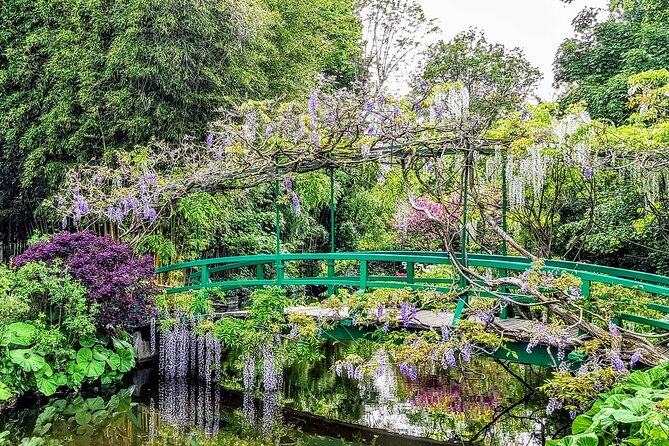
The short answer. Monet found Giverny from a train window. The painter made his pond out of a diverted stream, painted the bridge green on purpose and chose the water lilies from a catalogue. Decades after his death, a curator from Versailles saved the house with American money. Every Giverny tour takes you past the places these facts happened.
Monet saw the village from a train
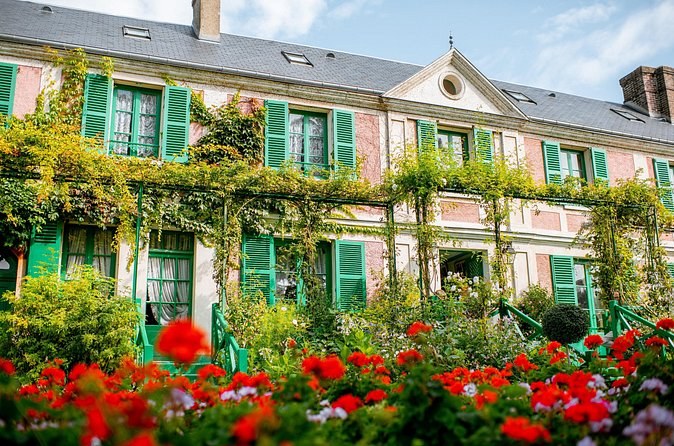
Monet noticed Giverny while looking out of a train window, and made up his mind to live there. In 1883 it was a farming village of about 301 people. Monet rented the house first, and bought the house and its land outright in 1890, once he could afford them. When you walk the village street today, you are walking through that village.
The house was full of children
Monet moved in with Alice Hoschedé and the children of both families. The Fondation asks you to picture the house with eight children in it, the vegetables arriving each morning from the kitchen garden, and friends coming out from Paris. Keep that in mind as you walk through: it was a family home long before it was a museum.
The pond is a diverted stream
In 1893 Monet bought a strip of land at the foot of his garden, on the far side of the railway line. Monet then diverted the Ru, a small branch of the River Epte, to fill a pond. That pond is the water garden you see today, and the source of the Water Lilies you find in museums round the world.
The bridge is green on purpose
The Fondation says one of Monet's Japanese prints inspired the bridge. But the painter had it painted green, to stand apart from the red used in Japan. Stand at the house end of the central path and you are on the same line as the bridge: the two gardens were laid out as one long view.
The water lilies came from a catalogue
Once the pond was filled, Monet wanted plants on it. In the painter's own words, as the Fondation quotes them, he got a catalogue and chose at random. One gardener then worked the pond full time, taking out every dead leaf so the surface stayed clear. The lilies you photograph are the descendants of a mail-order choice.
None of the paintings in the house are originals
The first studio, where Monet worked until 1899, is hung floor to ceiling with paintings. You will not find one original among them. The 60 or so canvases were chosen and copied when the room was restored in 2011. Monet's bedroom holds reproductions of works by his friends Cézanne, Renoir, Signac and Caillebotte. To see the painter's own large panels, you go to Paris.
He gave the Water Lilies to France
On 12 April 1922 Monet signed the gift of his great Water Lilies panels to the French State. Monet's eyesight was failing by then. The painter had noticed trouble in 1908, it was diagnosed in 1912, and Monet had a cataract operation in 1923. Monet died at Giverny on 5 December 1926, aged 86. The panels were unveiled at the Orangerie in Paris on 17 May 1927.
A curator from Versailles saved the house
Monet's son Michel died in a car accident in 1966 and left the estate to the Académie des Beaux-Arts. By then the house and studio stood neglected. From 1977 the restoration was led by Gérald Van der Kemp, chief curator of the Château de Versailles from 1953 to 1980. The curator paid for it as he had at Versailles, with American benefactors and the Versailles Foundation. The first major donor was Lila Acheson Wallace. The Fondation Claude Monet opened the house in 1980.
Giverny had an American art colony
From about 1887, American painters came to work in Giverny, drawn by the landscape and by Monet. Many stayed the whole year. The Hôtel Baudy was the centre of their social life, and you can still eat there today. In 1892 the American painter Theodore Earl Butler married Suzanne Hoschedé, Monet's stepdaughter, in the village. Things to do in Giverny covers the museum that tells the colony's story.
The last room opened in 2014
Blanche Hoschedé-Monet lived in the house at Giverny until her death in 1947, more than twenty years after Monet. Blanche's bedroom, the last room upstairs, opened to visitors for the first time in 2014. When you reach it, you are in the newest part of the visit.
Monet is buried by a medieval church
Monet did not leave the village even in death. The painter is buried in the churchyard of Sainte-Radegonde, the village church. It dates from the Middle Ages and is built partly in the Romanesque style. If you want to see the grave, pick a day that stops there, or keep half an hour free after the gardens.
It is one of the most visited art sites in France
About 750,000 people visited in 2023, by The Art Newspaper's annual count. The Fondation calls it the second most visited tourist site in Normandy. Every one of them comes between April and 1 November, because the house and gardens close from 2 November to 31 March. If you can, come on a weekday.
Five dates to remember
- 1883: Monet moves to Giverny and rents the house.
- 1890: Monet buys the house and its land.
- 1893: Monet buys the land across the railway and makes the pond.
- 1926: Monet dies at Giverny on 5 December, aged 86.
- 1980: the restored house and gardens open to the public.
Where the facts are on the ground
| Fact | Where you see it | Cost in 2026 |
|---|---|---|
| The diverted stream | The water garden | In the €13 ticket |
| The green bridge | The water garden, on the line of the central path | In the €13 ticket |
| The reproductions | The first studio | In the €13 ticket |
| The Japanese prints | The yellow dining room | In the €13 ticket |
| The American painters | The village street and its museum | Museum €12 |
| The Water Lilies panels | The Orangerie, Paris | Combined ticket €25.50 |
A guide puts these facts in the right place for you. The eight-seat half-day ends at Monet's grave, and the private day with an art historian spends an hour in the house. For your own visit, read how to visit and the house and gardens, part by part. The visitor guide has the fares, the gallery shows each part in photographs, and the page on the house and gardens has the timeline.
Days that bring the story with them
Giverny Monet's Home & Versailles Palace Day Trip from Paris
Eleven and a half hours by coach from Porte Maillot: Versailles in the morning, Monet's house and gardens in the afternoon, both entries paid.
From $161 per person
Check Availability
Giverny and Versailles Full-Day Private Guided Tour with Hotel Pickup
A private day from your hotel with an art historian: the palace and its great gallery first, then an hour at Monet's house and gardens.
From $928 per person
Check Availability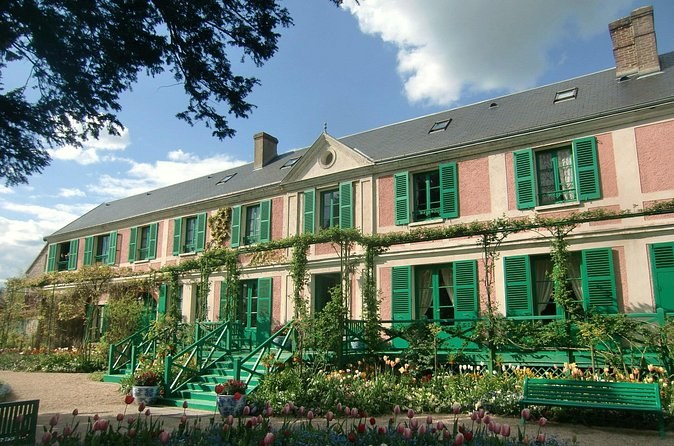
Le Havre Shore Excursion : Private Tour Giverny & Honfleur
A private day from the Le Havre cruise port for up to eight: Monet's gardens and Honfleur, back before the ship sails. Refunds up to six days ahead.
From $774 per person
Check AvailabilityNext: Choose the two or three facts you most want to stand in front of, and book the day that takes you there. Every fare sits side by side on Giverny Tours.